


Search for more information
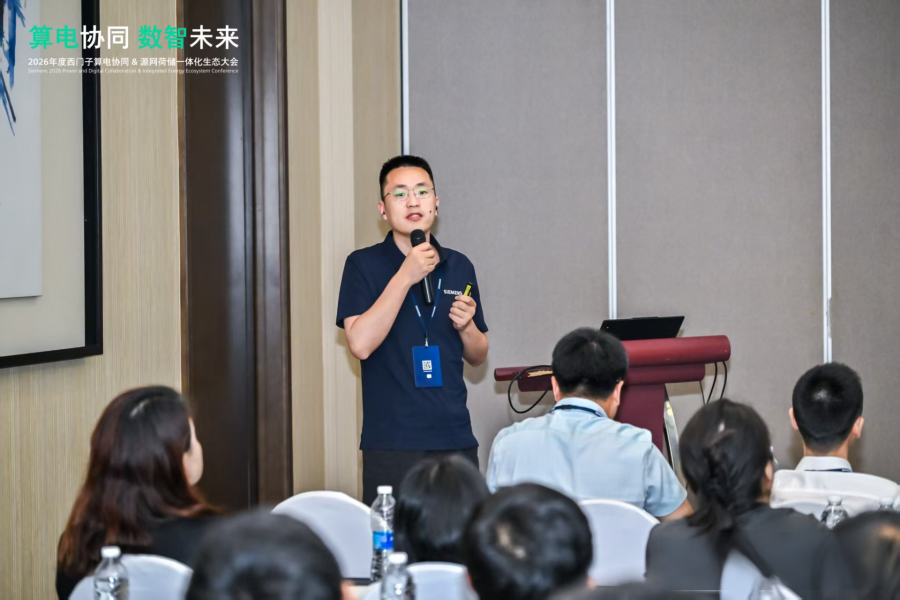 Figure 1. DIPU CTO Pu Xingyu delivers the featured presentation
On July 9, 2026, the Siemens 2026 Power and Digital Collaboration & Integrated Energy Ecosystem Conference was held in Chongqing. The event focused on AI computing infrastructure, power reliability, green energy, and data center infrastructure upgrades, and included a dedicated session on Data Center 5.0 architecture.
DIPU CTO Pu Xingyu was invited to deliver a presentation titled “From Engineering Projects to Repeatable Infrastructure Products.” He examined the changing AI data center delivery model from the perspectives of intelligent control, system architecture, and project execution.
AI Data Centers Are Moving from Project-Based to Productized Delivery
Data Center 5.0 is not simply a new solution; it represents a fundamental change in how data centers are built and delivered.
AI workloads are driving simultaneous changes in rack density, campus scale, cooling methods, and delivery schedules. As coordination across power, cooling, controls, data, and delivery becomes more complex, traditional project-based models that rely heavily on field coordination and individual experience are evolving toward standardized, modular, and repeatable delivery.
Productization means codifying architecture, interfaces, control logic, and test methods into repeatable standards. Development and validation move upstream into factory and virtual environments, allowing on-site integration and acceptance to follow previously validated plans.
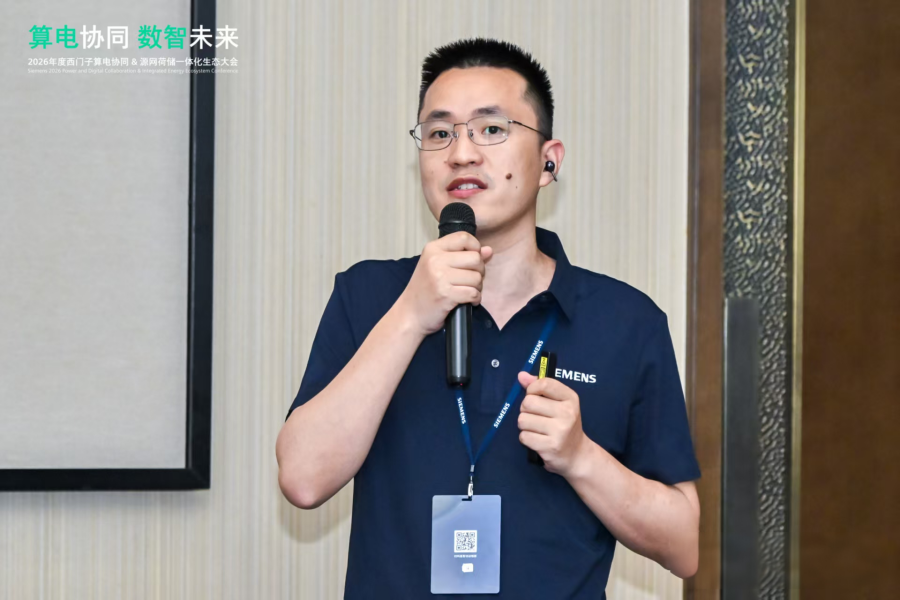 Figure 2. Pu Xingyu discusses the evolution of AI data center delivery models
The Core of Data Center 5.0 Is Cross-System Coordination
The defining advantage in Data Center 5.0 will not come from any single technology, but from an integrated architecture, product, validation, and delivery framework.
Using CUBE DC 5.0 as a reference case, the presentation organized infrastructure into five layers: IT workloads, cooling, power, controls and data, and delivery. The core is not the addition of more equipment, but the coordinated integration of air and liquid cooling, power distribution, BAS/BMS/EPMS, prefabricated modules, virtual commissioning, and commissioning management around the needs of computing workloads.
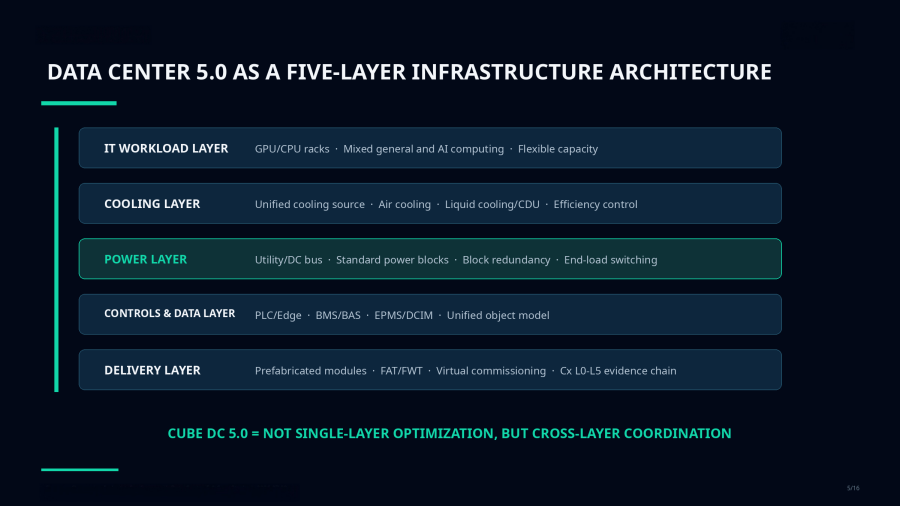 Figure 3. A five-layer infrastructure architecture for AI data centers
BMS and BAS Are Becoming the Hub for Cross-System Control
BMS and BAS should do more than provide monitoring screens. They must serve as the collaborative control hub for power, cooling, environmental systems, and liquid cooling.
In high-density AI data centers, BMS and BAS responsibilities extend beyond monitoring, data acquisition, and alarms to include unified object models, cross-system control strategies, exception handling, and recovery management. This enables infrastructure systems to operate as a coordinated closed loop focused on safety, reliability, and energy efficiency.
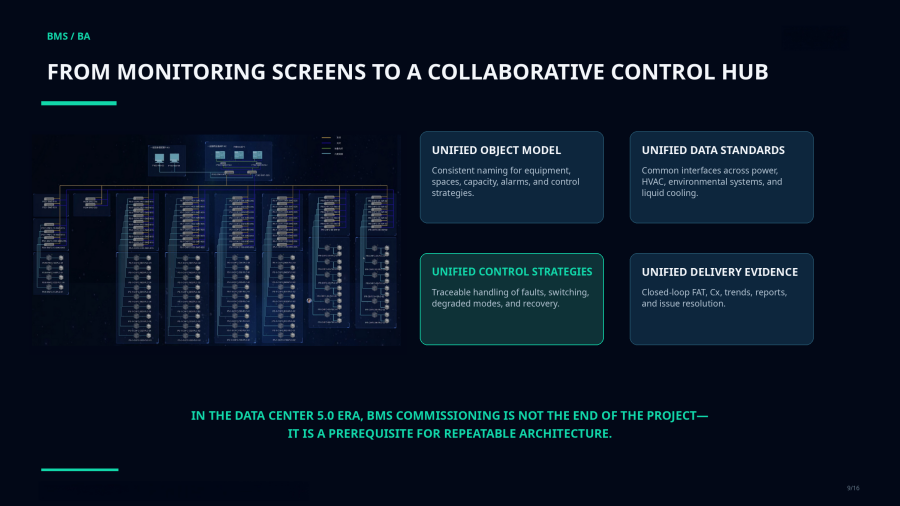 Figure 4. BMS/BA as a collaborative control hub
Moving Engineering Uncertainty Upstream
Modularization is not about doing less engineering. It is about moving site uncertainty into controlled factory and digital environments.
Modular delivery moves design development, assembly, software engineering, and interface integration into the factory. Virtual commissioning then validates control logic, system interfaces, and operating scenarios—including power loss, switching, faults, degraded modes, and recovery—before site work begins, helping teams identify issues early and establish clear acceptance evidence
Architectural Capability Is Built Through Complex Project
DeliveryTrue architectural capability is built across the full lifecycle of complex projects—from R&D and engineering design through successful delivery.
DIPU’s understanding of AI data center architecture is grounded in the R&D, engineering design, and delivery of more than 400 data center projects. Across these projects, the company has continuously transformed equipment models, HVAC process know-how, control logic, test scenarios, and delivery workflows into reusable technical assets.
At JD.com’s Langfang data center, DIPU delivered a redundant hot-standby integrated monitoring system covering power, environmental monitoring, building automation, diesel generators, and precision cooling, with approximately 400,000 points. Factory testing and virtual commissioning were used to validate system logic, data interfaces, and abnormal operating scenarios.
For campuses in Malaysia and Indonesia operated by a leading global data center customer, DIPU completed the coordinated design and delivery of BMS, EMS, and BAS across prefabricated power, hydronic, and generator modules. Each project included approximately 200,000 points, with a significant portion of software development and testing completed at the factory to support consistent delivery across regions.
An Open Platform for Multi-Vendor Systems and Complex Environments
Openness is not simply about connecting more devices. It is about enabling multiple brands, protocols, and systems to operate collaboratively within a unified architecture.
DIPU has built an integrated portfolio centered on DIPUONE and spanning BAS, BMS, EPMS, DipuSim virtual commissioning, and control hardware. The architecture supports unified connectivity, monitoring, and control across multiple brands and protocols, while providing the foundation for energy optimization and intelligent operations.
Advancing Productized Data Center Infrastructure
What owners ultimately buy is not a single technology, but the certainty that computing capacity will come online on schedule and remain reliable over the long term.
DIPU will continue to advance its “Platform + Control + Real-World Deployment” strategy, converting complex project experience into reusable products, standards, and delivery systems while supporting the evolution of AI data center infrastructure toward platform-based, standardized, modular, and intelligent operations.